
Arcadia Phoenix, Arizona
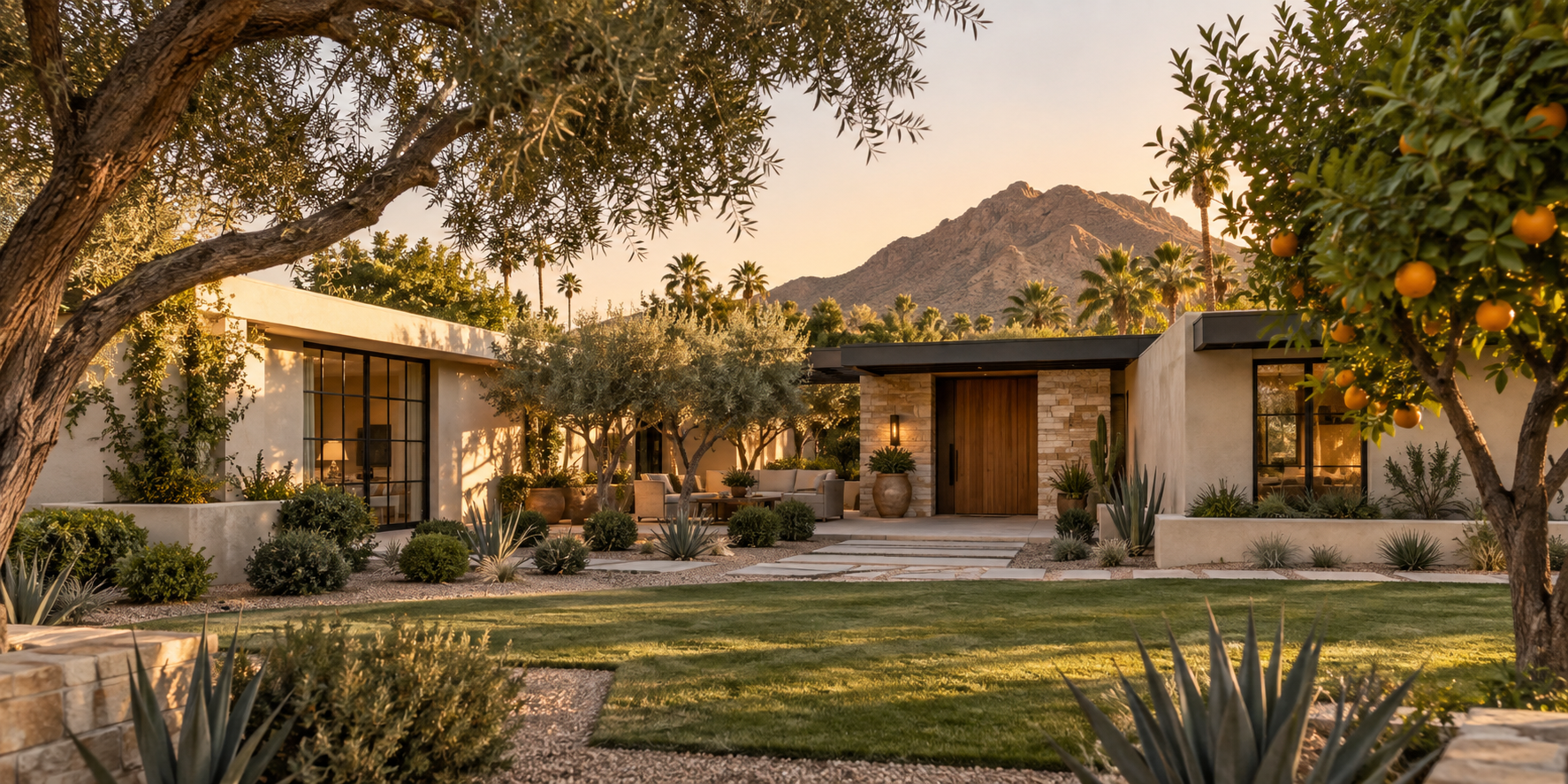
Mature trees, ranch architecture, and a distinctly central desert lifestyle
Arcadia offers a different expression of luxury than Scottsdale’s master-planned communities and guard-gated enclaves.
Its appeal comes from mature landscape, architectural character, larger lots, central access, and the feeling that the neighborhood has evolved over time rather than being built all at once.
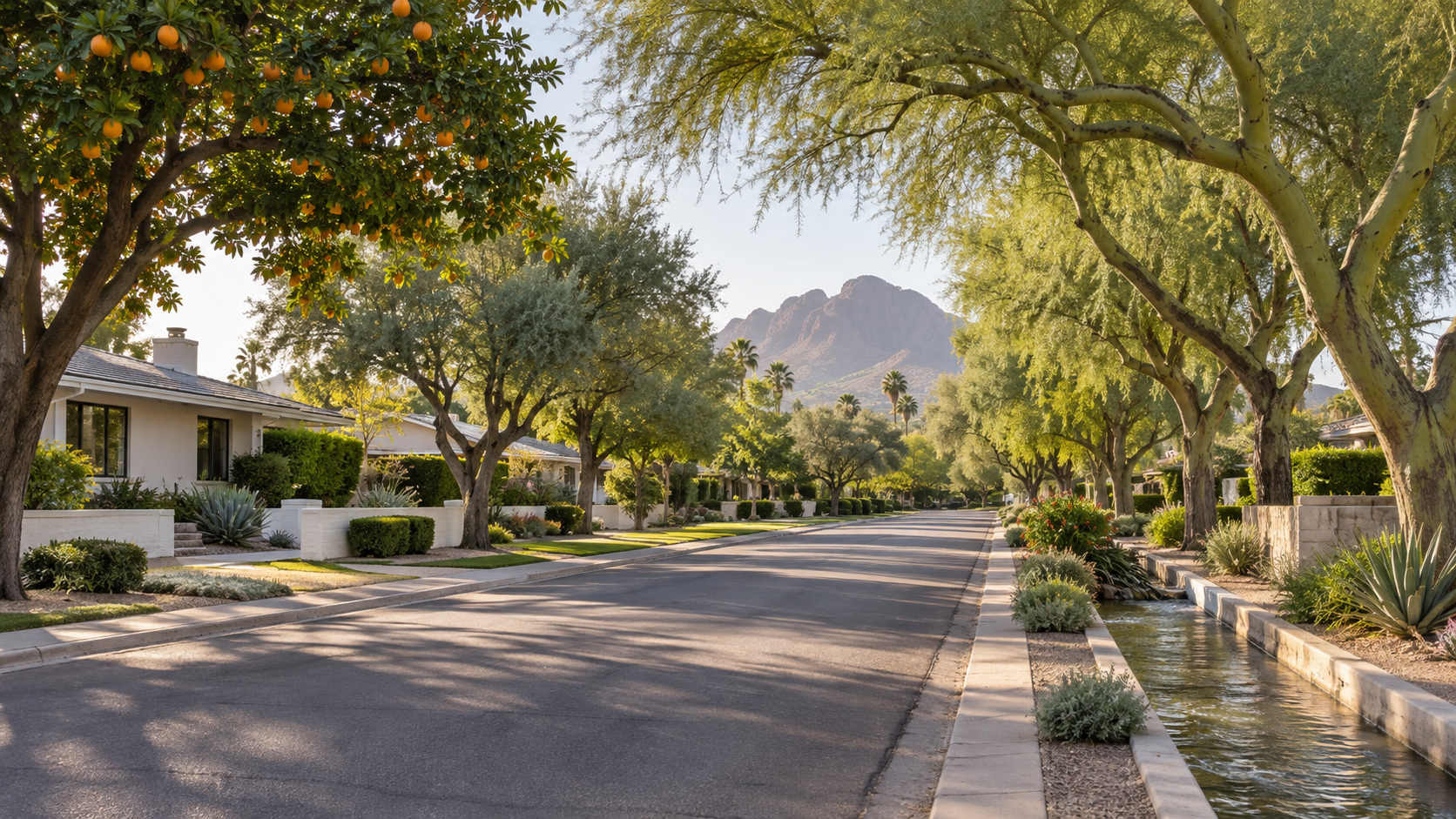
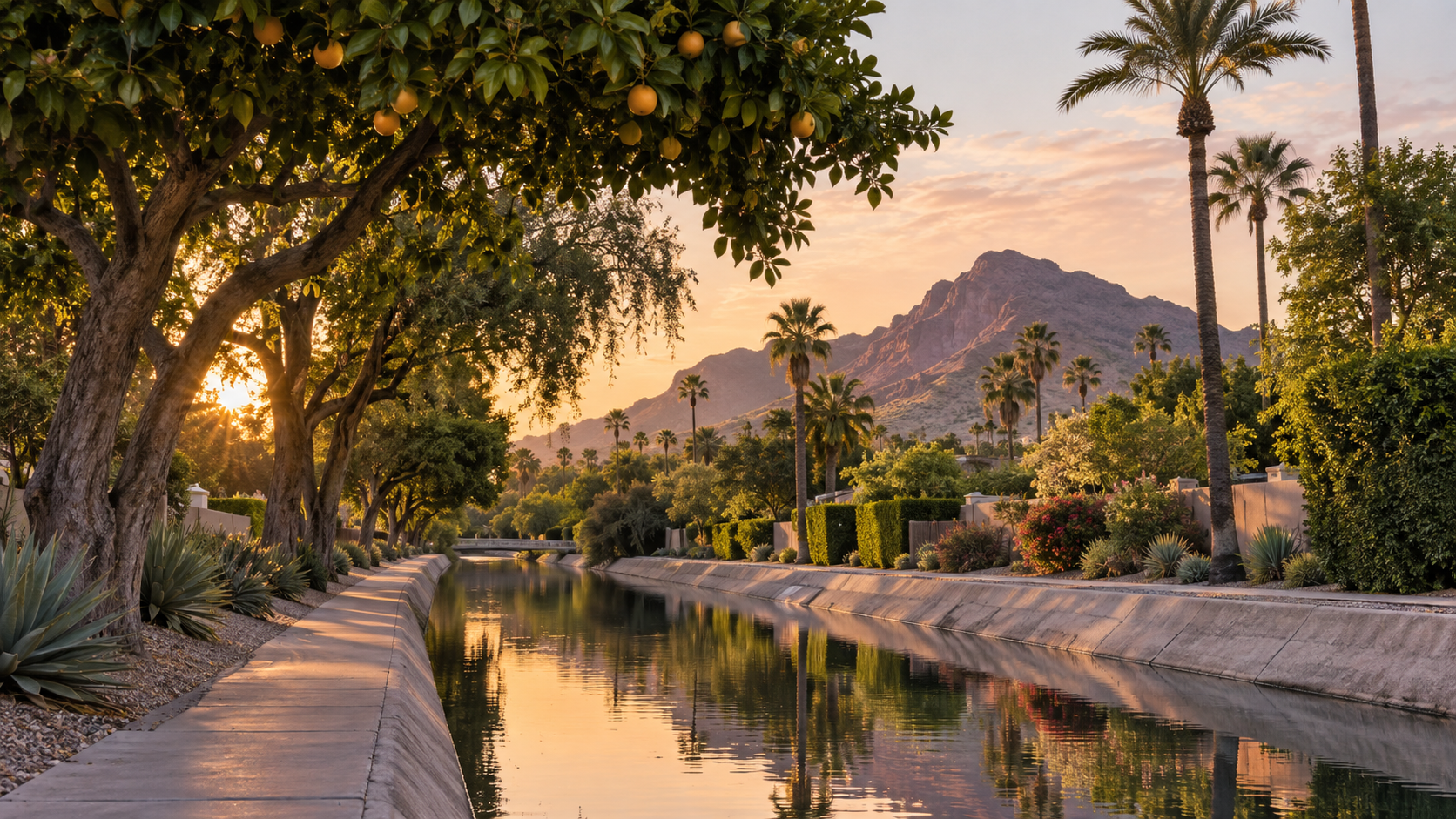
Citrus trees line established streets. Ranch homes sit behind generous setbacks. Irrigation canals and mature shade trees create a surprising sense of greenery in the desert. Camelback Mountain provides a constant visual landmark, while nearby dining, shopping, resorts, and cultural destinations make the neighborhood exceptionally connected.
Arcadia is primarily located in Phoenix, close to the Scottsdale border. For buyers searching the Scottsdale area, it offers a more established and individualistic alternative to newer North Scottsdale communities.
A neighborhood shaped by landscape
Arcadia’s character is closely tied to its history as an agricultural and citrus-growing area.
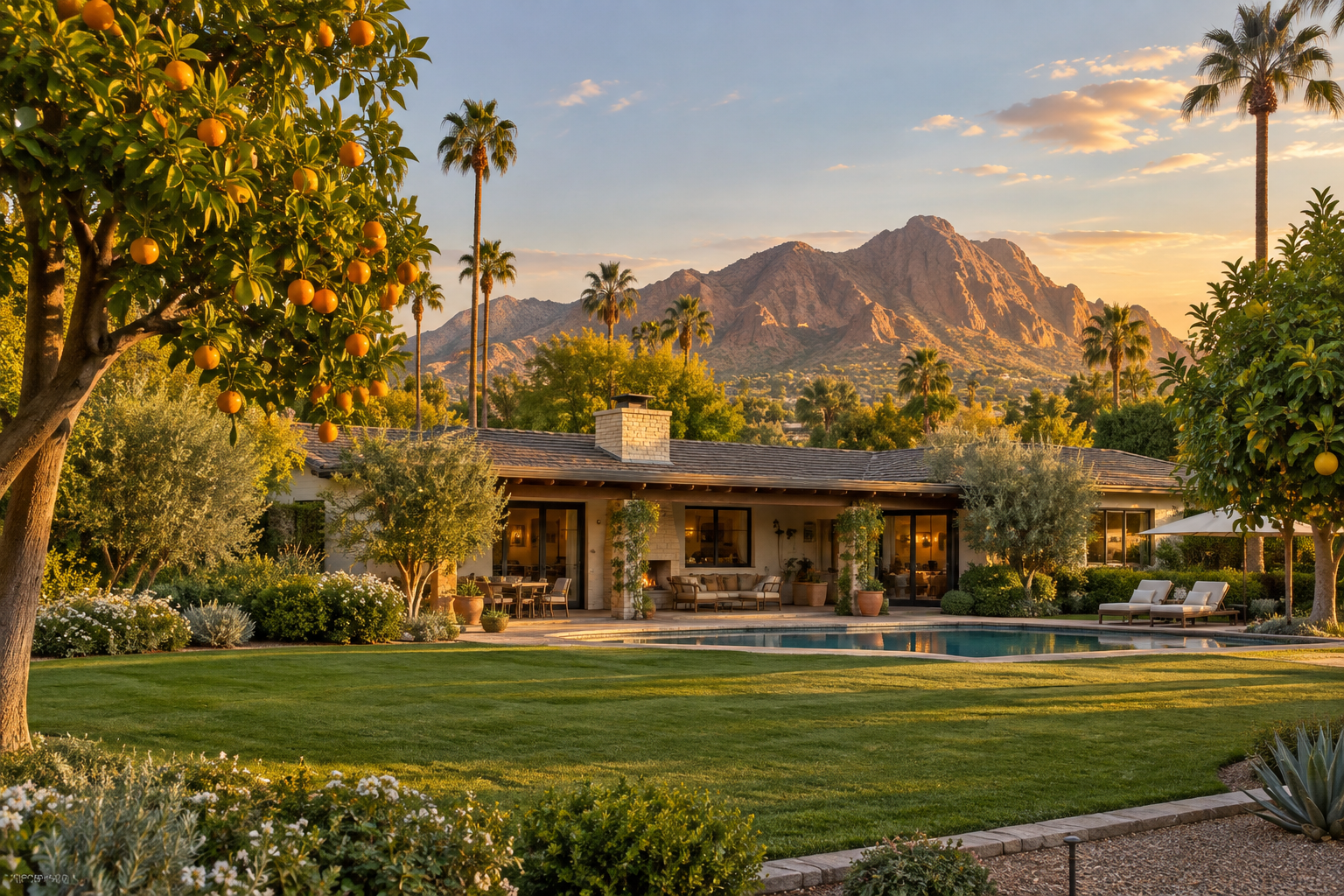
The neighborhood was originally planned around large rural homesites and citrus orchards. That history is still visible in the mature orange, lemon, and grapefruit trees found throughout the area, as well as in the irrigation infrastructure that continues to influence the landscape.
The result is one of the most recognizable residential environments in the Valley. Arcadia feels leafy, open, and established, with a landscape that often matters as much as the home itself.
The streets vary from block to block. Some retain a strong collection of original ranch homes and mature trees. Others include carefully renovated properties, contemporary additions, and newly built homes designed to fit within the scale of the neighborhood.
The setting
Arcadia is generally associated with the area north of the Arizona Canal and south of Camelback Road, extending from 44th Street toward Scottsdale Road. The exact boundaries can vary depending on the map, neighborhood association, and how a property is marketed.
That distinction matters when buying. Some properties associated with Arcadia are located in Phoenix, while portions farther east extend toward Scottsdale. Municipal services, zoning, taxes, and neighborhood regulations should always be confirmed for the specific address.
Geographically, Arcadia sits near several of the Valley’s most recognizable destinations:
Camelback Mountain
The Arizona Canal
Old Town Scottsdale
Scottsdale Fashion Square
The Biltmore area
The Camelback Corridor
Papago Park
Downtown Phoenix
The location makes it possible to enjoy a quiet residential setting while remaining close to restaurants, shopping, resorts, galleries, fitness studios, and major employment areas.
Homes and architecture
Arcadia real estate is defined by variety rather than a single architectural style.
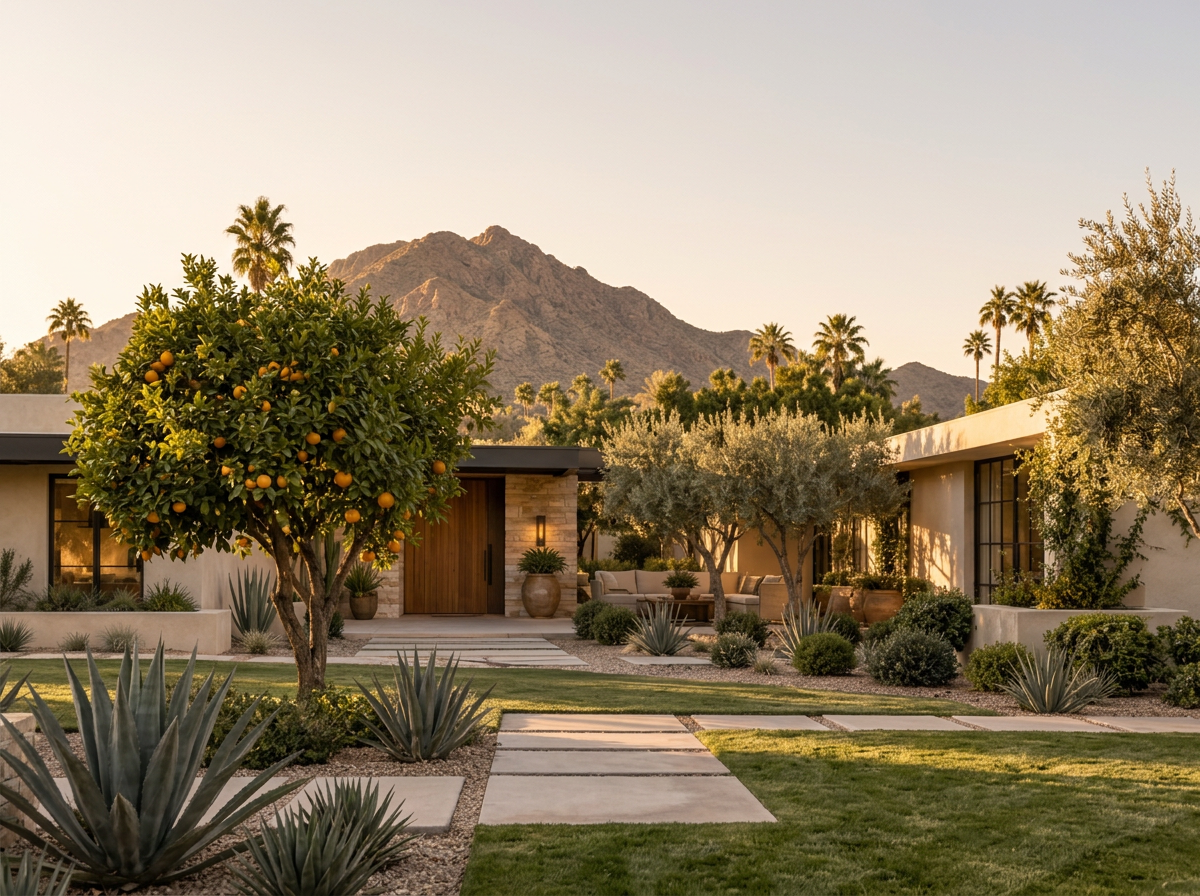
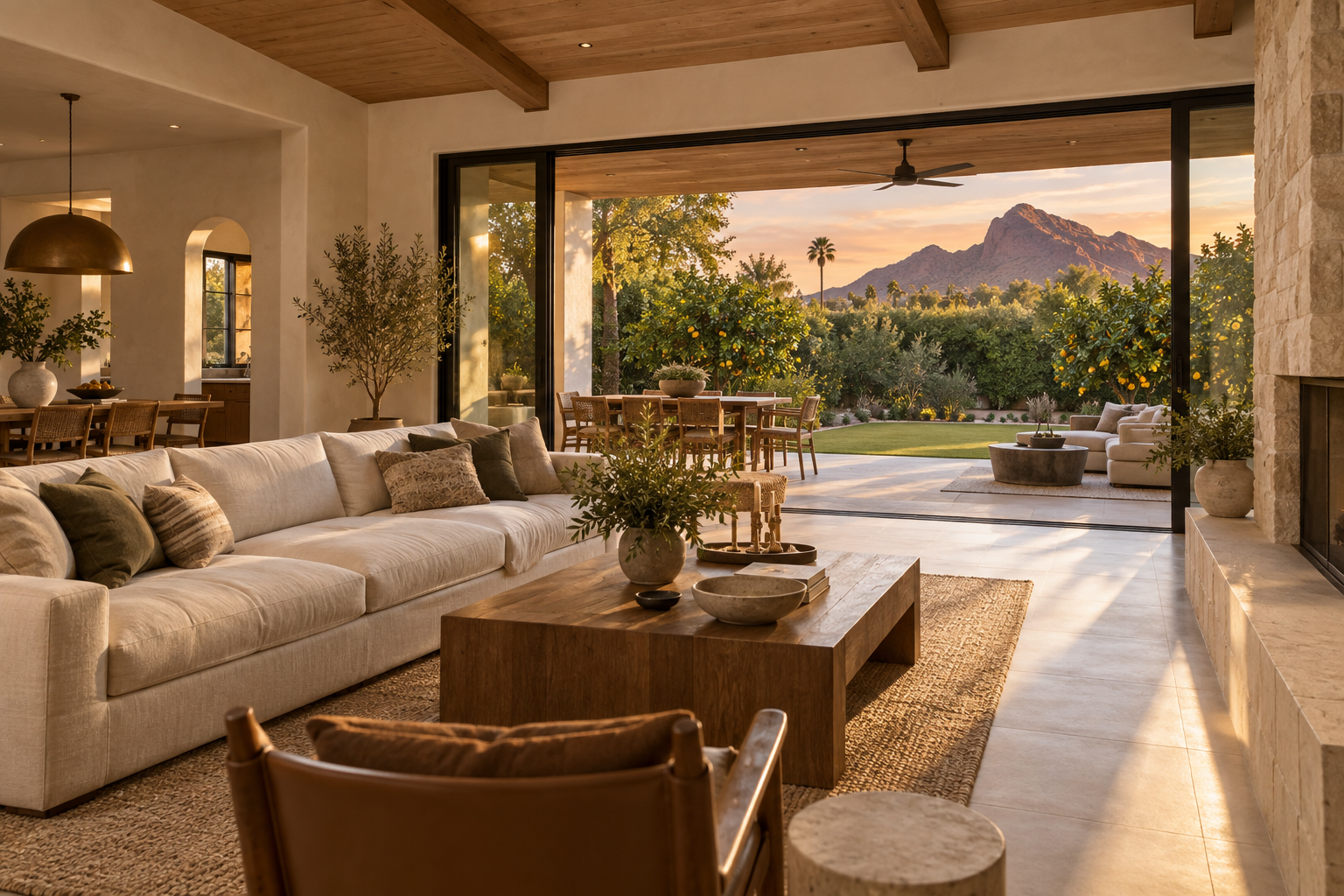
Many of the original homes are single-story ranch properties with broad floor plans, low rooflines, private courtyards, and generous outdoor areas. Brick, stucco, natural stone, wood, and glass are common materials, often reflecting the relaxed indoor-outdoor character of the desert.
Other properties have been substantially renovated or rebuilt. Some preserve the proportions and warmth of a mid-century ranch while adding contemporary kitchens, expanded living areas, modern windows, and refined outdoor spaces. New construction may introduce cleaner lines, larger glass openings, more intentional landscaping, and a stronger connection between the interior and backyard.
Buyers may encounter:
Original and updated ranch homes
Mid-century properties
Custom new construction
Rebuilt or expanded homes
Larger estate-style properties
Townhomes and condominiums near the edges of the area
Properties with mature citrus and extensive landscaping
Because Arcadia is not a single subdivision, the experience of buying here is highly property-specific. Lot orientation, tree canopy, proximity to the canal, street character, and the relationship between the home and its surroundings can vary considerably.
Outdoor living in Arcadia
Arcadia’s outdoor character is one of its strongest qualities.
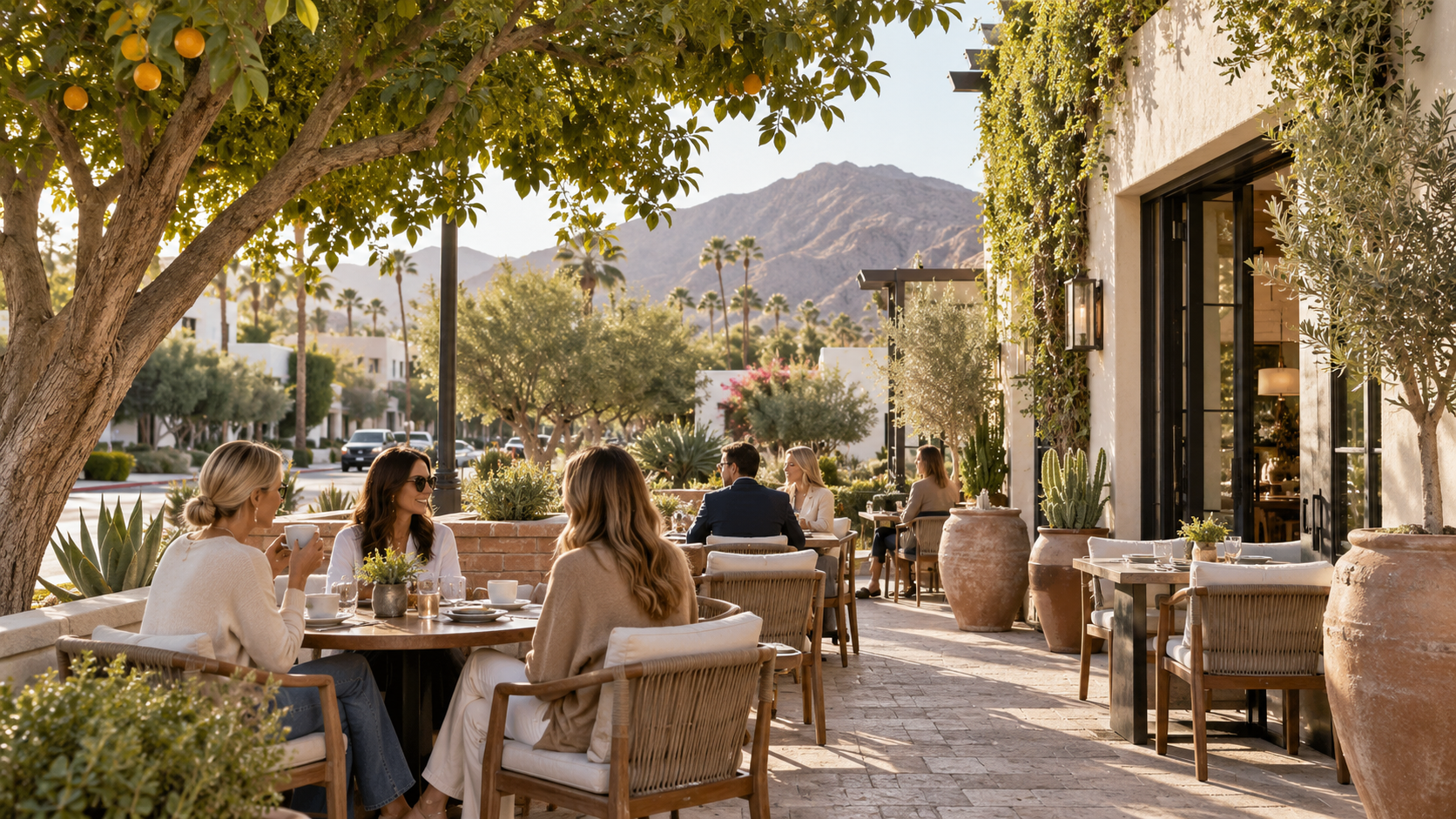
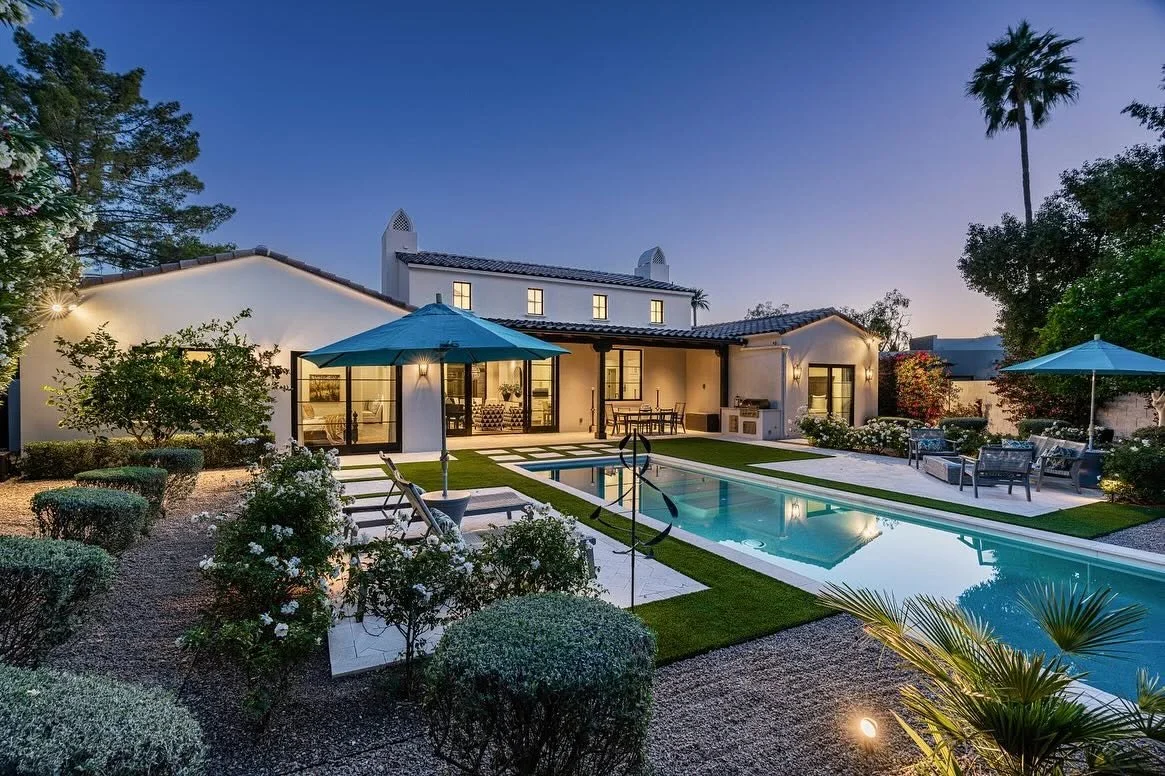
Mature trees provide shade, privacy, and a sense of scale that is difficult to recreate in a newer development. Many homes are designed around courtyards, covered patios, pools, lawns, citrus groves, and outdoor dining areas.
Camelback Mountain is the defining natural landmark. Its presence is especially striking from the northern portions of the neighborhood, where the mountain creates a dramatic backdrop to the tree canopy and low-slung architecture.
The Arizona Canal also contributes to the area’s visual identity. Depending on the location, canal access can offer a quieter setting for walking, biking, and enjoying the established landscape.
Arcadia is also home to the Shemer Art Center, a longtime cultural resource located in a historic property connected to the neighborhood’s early development. Its presence adds another layer to Arcadia’s character, combining art, history, and community life within the residential setting.
Dining, shopping, and everyday convenience
Arcadia’s central location places it close to a wide range of restaurants, coffee shops, boutiques, markets, resorts, and wellness destinations.
The Camelback Corridor and nearby Scottsdale offer an extensive collection of dining and shopping options. Old Town Scottsdale is close enough for galleries, restaurants, events, and nightlife, while the Biltmore area provides another concentration of restaurants, retail, offices, and hospitality.
The appeal is not that everything is directly outside the front door. Arcadia remains primarily residential. Instead, its value comes from the ability to move easily between a quiet home setting and the broader collection of places that surround it.
For buyers who want established residential character without feeling removed from the city, that balance can be compelling.
What buyers should consider
Arcadia rewards careful, property-specific due diligence.
The age and condition of homes can vary significantly. Buyers should look closely at major systems, roof age, plumbing, electrical, windows, additions, drainage, and the quality of previous renovations.
The landscape also deserves attention. Mature trees and citrus groves are part of the neighborhood’s appeal, but they require ongoing maintenance. Irrigation arrangements, water rights, tree health, pool systems, and landscape expenses should be reviewed carefully.
Other considerations include:
Whether the property is located in Phoenix or Scottsdale
Applicable zoning and planning requirements
Any neighborhood or architectural guidelines
Lot orientation and privacy
The condition of mature trees and irrigation systems
Renovation history and permitted additions
Flood, drainage, and insurance considerations
The relationship between the home, street, canal, and surrounding properties
Arcadia also includes areas affected by special planning considerations designed to help preserve the neighborhood’s established landscape and residential character. Buyers considering a major renovation, addition, or new construction project should confirm the applicable requirements before moving forward.
Who may be drawn to Arcadia?
Arcadia may appeal to buyers who value:
Mature trees and established landscaping
Ranch-style architecture and individual homes
Indoor-outdoor living
Larger lots and private outdoor spaces
Camelback Mountain views
Central access to Scottsdale and Phoenix
A neighborhood with history and visual character
Renovated homes with thoughtful design
The ability to be close to restaurants, shopping, and cultural destinations
It may be especially appealing to buyers who want a home with a stronger sense of place. In Arcadia, the landscape, the street, and the surrounding architecture all contribute to the experience of the property.
Local insight
Arcadia is best understood one street at a time.
The most compelling homes often balance the original character of the neighborhood with updated systems, well-considered renovations, and outdoor spaces that take advantage of the mature landscape.
When evaluating a property, I look beyond the finishes. I pay attention to the scale of the lot, the quality of the surrounding streetscape, the health of the trees, the irrigation setup, the renovation history, and how the property fits within its setting.
Arcadia is not interchangeable with Arcadia Lite, the Camelback Corridor, or nearby Scottsdale neighborhoods. These areas may overlap in marketing language, but they can offer different property types, municipal considerations, and daily experiences.
Understanding those distinctions is an important part of making a confident decision.
Current Arcadia real estate
Arcadia real estate includes a changing mix of renovated ranch homes, custom residences, original properties, and occasional opportunities for new construction.
Current inventory, pricing, and buyer competition can vary considerably depending on the property’s lot, architecture, condition, renovation quality, and exact location.
For the most current Arcadia listings and market information, contact me for a tailored search based on your preferred home style, location, lot characteristics, and lifestyle priorities.
Explore Arcadia
Arcadia is one of several distinct ways to experience the Scottsdale and Phoenix area.
Explore my full neighborhood guide to compare Arcadia with DC Ranch, Silverleaf, McCormick Ranch, Paradise Valley, Old Town Scottsdale, and other communities across the Valley.
If you are considering buying or selling in Arcadia, I would be happy to help you understand the neighborhood, evaluate the property, and make a thoughtful plan.